
Dr. Apurba Kumar Borah, Consultant & HOD, Critical Care Medicine, India
Abstract
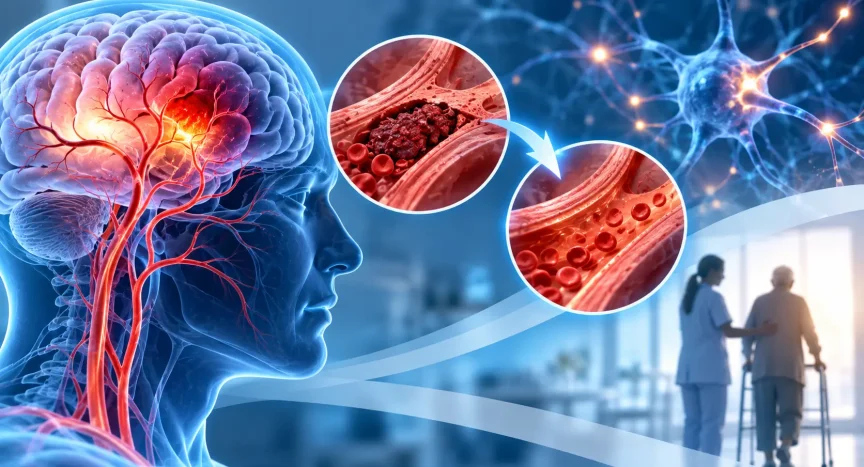
Acute ischemic stroke (AIS) remains a leading cause of permanent disability and mortality worldwide. Traditional interventions focus primarily on rapid reperfusion via thrombolysis or mechanical thrombectomy, both of which are severely limited by strict therapeutic windows. Sovateltide (marketed as Tyvalzi), a first-in-class selective endothelin-B receptor (ETBR) agonist, represents a paradigm shift in stroke therapy. Rather than acting solely as a passive protectant, sovateltide stimulates the central nervous system’s intrinsic repair mechanisms, driving neurogenesis, angiogenesis, and mitochondrial repair. Following its regulatory approval in India and subsequent multi-national evaluation, this article explores the mechanism of action, clinical trial efficacy, and therapeutic future of sovateltide in neurovascular medicine.
Introduction
The primary objective in managing an acute ischemic stroke is minimizing the penumbra—the salvageable brain tissue surrounding the primary ischemic core. While tissue plasminogen activator (tPA) and endovascular thrombectomy have revolutionized acute care, only a small percentage of stroke victims qualify for these treatments due to narrow therapeutic windows or secondary hemorrhagic risks.
Sovateltide (originally designated as IRL-1620, PMZ-1620, or SPI-1620) introduces a distinct regenerative framework to neurology. As a highly selective synthetic analog of endothelin-1, sovateltide bypasses the vasoconstrictive liabilities of endothelin-A receptors to preferentially bind to endothelin-B receptors. By expanding the viable treatment window up to 24 hours post-symptom onset, it offers a novel approach to post-stroke recovery.
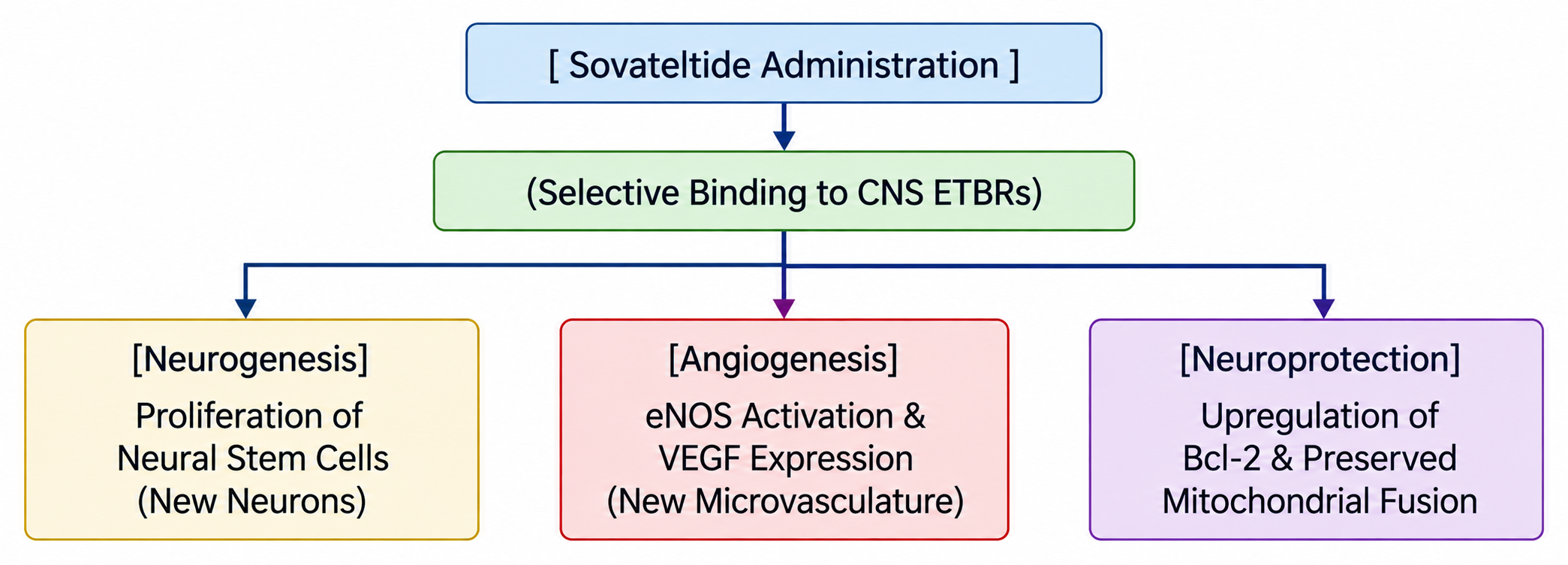
Mechanism of Action: The Triad of Neurovascular Repair
Sovateltide’s therapeutic footprint relies on its ability to trigger cellular pathways essential for neural and vascular restoration:
- Neurogenesis and Cellular Migration: Post-injury, the mature mammalian brain maintains a pool of dormant neural stem and progenitor cells (NSPCs). Sovateltide binds directly to ETBRs on these cells, stimulating their proliferation, migration, and ultimate differentiation into functional, mature neurons to replace damaged pathways.
- Angiogenesis and Reperfusion: The compound activates the endothelial nitric oxide synthase (eNOS) pathway, triggering a sustained release of nitric oxide (NO), a powerful local vasodilator. Concurrently, it upregulates vascular endothelial growth factor (VEGF), promoting the growth of new capillary networks to permanently restore local micro-perfusion.
- Mitochondrial Protection and Anti-Apoptosis: Ischemia forces cells into programmed cell death (apoptosis). Sovateltide preserves cellular vitality by upregulating anti-apoptotic proteins (such as Bcl-2) and downregulating pro-apoptotic markers like caspase-3. Additionally, it supports mitochondrial fusion and biogenesis, protecting the vital energy centers of compromised neurons.
Clinical Trial Evolution and Efficacy
The transition of sovateltide from animal stroke models to human subjects has yielded highly positive data. Preclinical testing across rodent and canine cohorts demonstrated reliable safety boundaries, marked reductions in infarct volumes, and meaningful improvements in motor deficit recovery.
Phase II Findings
Initial prospective, randomized human trials established the drug’s safety when layered on top of standard supportive stroke care. Multiple ascending doses (ranging from 0.3 to 0.9 µg/kg) confirmed that therapeutic levels did not trigger adverse hemodynamic shifts, paving the way for definitive phase III validation.
Phase III Results
A randomized, double-blind, placebo-controlled, multicentre Phase III trial evaluated 158 adult patients presenting with acute cerebral ischemic stroke. The patients received either intravenous sovateltide or a matched saline placebo within 24 hours of stroke onset, alongside standard of care.
The primary endpoints at 90 days post-treatment revealed distinct therapeutic advantages:
- Modified Rankin Scale (mRS): A remarkable 76.1% of patients in the sovateltide group achieved a neurological improvement of ≥ 2 points on the mRS, compared to only 52.8% in the control arm (P = .005).
- NIH Stroke Scale (NIHSS): Patients treated with sovateltide displayed a significantly greater shift toward lower overall disability scores, mirroring an improvement of ≥ 6 points on the NIHSS (P = .019).
The drug demonstrated a highly favorable safety profile. Adverse effects were generally mild, presenting primarily as self-limiting nausea, transient dizziness, or minor injection-site irritation.
Regulatory Milestones and Future Outlook
European nations provide a sharp contrast to the productivity-driven models of North America, relying heavily on centralized public healthcare systems with rigid salary bands.
United Kingdom
Within the British National Health Service (NHS), Intensive Care Medicine (ICM) is typically pursued as a dual specialty with Anaesthesia, Medicine, or Emergency Medicine. Consultant salaries are highly transparent and strictly dictated by national contracts. As outlined by the British Medical Association (BMA) Consultant Pay Scales, a starting consultant basic salary stands at £113,565 (~$145,000 USD). Seniority-based step increases occur over a 14-year timeline, maxing out at a basic salary ceiling of £150,569. While gross pay is elevated by Programmed Activities (PAs) and on-call availability supplements, high income tax thresholds and mandatory NHS pension contributions (up to 12.5%) significantly compress net take-home earnings, contributing to ongoing workforce emigration pressures.
Western & Northern Europe
In nations like Germany, Switzerland, and the Netherlands, public institutional contracts establish a standardized baseline. Public hospital intensivists across these regions enter a baseline monthly bracket equivalent to $4,800 to $5,100 USD early in their career. However, these systems permit substantial financial scaling: specialists who transition into corporate hospital leadership, enter private practice clinics, or oversee lucrative clinical trial protocols routinely double or triple these public baselines.
4. Emerging Markets: Rapid Corporate Expansion vs. Local Realities
In May 2023, the Central Drugs Standard Control Organisation (CDSCO) in India granted regulatory approval for sovateltide for the treatment of cerebral ischemic stroke within 24 hours of onset. To secure global integration, the pivotal Phase III multi-national RESPECT-ETB trial (NCT05691244) commenced enrollment to confirm these outcomes across broader demographic populations.
Because ETBR signaling plays a fundamental role across multiple types of neural injury, investigative pipelines are actively exploring sovateltide’s efficacy in other central nervous system pathologies, including Alzheimer’s disease, acute spinal cord injuries, and neonatal hypoxic-ischemic encephalopathy (HIE).
References
- Gulati, A., et al. (2024). Efficacy and Safety of Sovateltide in Patients with Acute Cerebral Ischaemic Stroke: A Randomised, Double-Blind, Placebo-Controlled, Multicentre, Phase III Clinical Trial. Drugs, 84(11), 1345–1358. PubMed Central Link.
- Pharmazz, Inc. (2025). Clinical study details of PMZ-1620 (Sovateltide) in acute ischemic stroke and spinal cord injury protocols. ClinicalTrials.gov Identifier: NCT04047563 / NCT04054414.
- Springer Nature. (2023). Sovateltide: First Approval for Acute Cerebral Ischemic Stroke. Drugs, 83(10), 921–927. Springer Nature Link.
- American Heart Association (AHA). (2023). Neurological outcomes and ordinal shifts in mRS following selective Endothelin-B Receptor Agonism. International Stroke Conference Presentation Abstract. AHA Journals Link.


Customer Reviews
Thanks for submitting your comment!